


Starting swim lessons with your baby is an exciting step — full of smiles, songs, and splashes. But for many parents, it can also come with a few uncertainties. How do you make sure your child has a positive experience? What should you avoid doing? Especially if your little one is your first, it’s tough to know the do’s and don’ts of baby swim lessons?
At Chicago Blue Dolphins, we’ve taught thousands of babies and toddlers to love the water, and we’ve learned that small details make a big difference. Here’s a quick guide to the do’s and don’ts that help your little one learn faster, stay safe, and have fun.
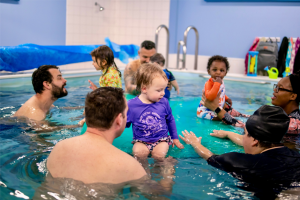
Get ready for 30 minutes of concentrated joy!
Do’s
1. Do Bring the Right Gear
A well-fitting swim diaper is a must for all babies and toddlers under 4 years old. Bring a cozy towel (hooded ones are great), a change of clothes, and your own swimsuit — because you’ll be in the water too!
2. Do Arrive a Little Early
Give your baby time to take in the new sights, sounds, and smells of the pool. A calm transition sets the tone for a happy class.
3. Do Stay Positive and Relaxed
Babies mirror your emotions. If you’re relaxed and smiling, they’ll feel safe and confident. Treat every splash as a success!
4. Do Celebrate Small Wins
Maybe your baby dips their chin in the water or kicks a few times — that’s progress! Applaud every little milestone. Consistent encouragement helps them associate swimming with joy.
5. Do Practice Outside of Class (Safely)
Bath time is a great opportunity to play with bubbles, pour water over their shoulders, or practice floating on their back with your support. Gentle, familiar exposure builds comfort.
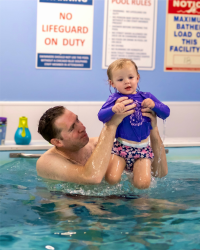
Bonding time with your little one is the key to building a love for water
Don’ts
1. Don’t Rush or Force Anything
Never push your baby to submerge, float, or perform a skill they’re not ready for. Progress comes naturally through trust, not pressure.
2. Don’t Compare Your Child to Others
Every baby is unique. Some splash right in, while others need more time to feel safe. Comparison adds pressure — focus on your child’s own joyful journey.
3. Don’t Skip Naps or Meals Before Class
A tired or hungry baby won’t enjoy the pool. Try scheduling lessons for a time of day when your child is well-rested and alert.
4. Don’t Expect “Swim Lessons” to Mean “Swimming”
At this stage, “learning to swim” means getting comfortable with the water and learning safety basics — not freestyle strokes or long swims. The real goal is water love, not perfection.
5. Don’t Forget to Enjoy Yourself
The best swim lessons are about connection. Laugh, splash, and enjoy the moment. Your baby will remember the feeling of your presence and encouragement far more than any drill.
Why It Matters
When parents follow these do’s and don’ts, learning happens naturally. Babies develop comfort, confidence, and coordination — all the essential ingredients for a lifelong love of swimming.
At Chicago Blue Dolphins, we focus on gentle, child-centered instruction that turns water time into quality bonding time. Together, we help babies become happy, safe, confident little swimmers — one splash at a time.
Ready to start your baby’s swim journey?
Learn more and sign up for Infant-Toddler Swim Classes →